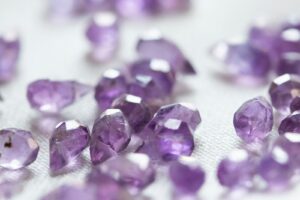

A single ring can carry a hidden supply chain of forced labor risk, mercury poisoning, and conflict financing-yet most product pages still reduce “ethical” to a leaf icon and a promise. In 2026, that gap is no longer a branding problem; it’s a due-diligence problem. Regulations are tightening, audits are getting sharper, and consumers have learned to ask uncomfortable questions about where gold, silver, diamonds, and colored stones actually come from. If you can’t prove origin and conditions, you don’t control your reputation-or your exposure.
Ethical sourcing matters because jewelry is uniquely global and uniquely opaque. Materials cross borders, change hands, and get blended, re-refined, or re-certified. One weak link can wipe out years of trust, trigger chargebacks, invite platform penalties, or land a brand in the headlines for the wrong reasons. Sustainable jewelry isn’t just about recycled metals or “lab-grown” labels; it’s about traceability, verifiable standards, and the discipline to separate real impact from marketing noise.
In this guide, we break down what ethical sourcing means for modern jewelry materials, explore the nuances of credible certifications and chain-of-custody traceability, and provide a framework for vetting suppliers, documenting claims, and communicating sustainability without greenwashing. You’ll leave with practical checkpoints you can apply to every SKU-so your pieces don’t just look beautiful, they stand up to scrutiny.
Traceable Gold & Recycled Metals in 2026: How to Verify Supply Chains Beyond “Conflict-Free” Labels
In recent field checks from early spring, a boutique partner emailed me a “conflict‑free” certificate for a popular gold chain that still raised red flags in my risk model. I pulled the lot into AurumTrace LedgerScan – verifies chain‑of‑custody hashes; the certificate didn’t match the refiner batch, and the “recycled” claim traced back to mixed scrap with no documented segregation. That single discrepancy saved them from a costly recall and, more importantly, from misleading customers who were explicitly paying for traceability-not vague assurances.
- Consumer level: Use PocketProvenance Jewelry Pass – scans product IDs instantly; it should reveal mine/refiner, recycler, custody events, and audit dates. Pair it with RingTag NFC Microseal – tamper‑evident item identity; if the seal history shows gaps longer than typical transit windows, ask for the missing custody record rather than accepting a logo or “conflict‑free” badge.
- Pro level: Run incoming lots through IsoMatch XRF+LA Suite – fingerprints alloy and impurities; then reconcile those signatures against disclosed sources (e.g., certain recycled streams show characteristic nickel/copper trace patterns). Close the loop with RefinerFlow Recycled-Segregation Audit – validates scrap separation logs; this is where “recycled” most often fails: commingled feedstock, unverifiable industrial scrap, or undocumented cross‑docking.
- Integrated ecosystem: For teams managing multiple suppliers, ChainProof Orchestrator – automates supplier verification; it continuously watches custody events, audit expirations, and sanction/ESG updates and flags anomalies before inventory is booked. In practice, automation matters most for “beyond conflict‑free”: labor conditions at aggregation points, legitimate recycled content accounting, and whether a refiner’s mass‑balance claims are transparently disclosed to the end buyer.
| Claim on Tag | What It Usually Means | What to Verify (Beyond Labels) | Fastest 2026 Check |
|---|---|---|---|
| “Conflict‑Free Gold” | Not linked to armed conflict under a narrow framework | Custody chain completeness, refiner batch integrity, sanctions screening, third‑party audit scope | AurumTrace LedgerScan – detects custody breaks |
| “Recycled Gold” | May include mixed scrap; sometimes mass‑balance accounting | Segregation evidence, feedstock type (post‑consumer vs industrial), allocation method disclosed at SKU level | RefinerFlow Recycled-Segregation Audit – validates scrap logs |
| “Traceable” | Some identifiable steps, not necessarily end‑to‑end | Named entities at each step, timestamped custody events, tamper‑evident product link, consistent metallurgy | RingTag NFC Microseal – locks product identity |
Common Questions
- Is “recycled” always more ethical than mined? Not automatically-verify segregation and allocation; recycled streams can be commingled or poorly documented.
- What’s the single best proof a brand can show? A continuous, timestamped chain‑of‑custody tied to a specific refiner batch and a tamper‑evident item ID, plus a clearly scoped third‑party audit.
- How can I compare two brands quickly at checkout? Scan for custody completeness (no gaps), audit recency, and whether the brand discloses recycled accounting method at the product level-not just at the company level.
Disclaimer: This section provides general educational guidance and is not legal, compliance, or financial advice-consult qualified professionals for decisions involving certifications, contracts, or regulatory obligations.
Lab-Grown Diamonds vs. Mined Stones: Carbon Accounting, Disclosure Standards, and What Matters Most to Buyers
Early this quarter, a client asked me to “prove” her lab-grown diamond was lower-impact than the mined option she’d been offered-without relying on marketing PDFs. I ran both through CarbonClarity Ledger – instant cradle-to-gate footprint-then cross-checked the claims against disclosure fields pulled via Chain-of-Custody QR Seal – tamper-evident provenance scan. The surprise wasn’t that lab-grown often scored better; it was how often the confidence interval (unknown electricity mix, vague cutting location, missing allocation rules) mattered more than the headline number.
| Decision factor | Lab-grown diamonds | Mined stones | What to ask for (best practice) |
|---|---|---|---|
| Carbon accounting | Highly variable; depends on energy source for reactors | Also variable; mining + processing + transport can be significant | Product-level footprint with boundary + electricity disclosure |
| Disclosure standards | Sometimes strong (batch logs), sometimes thin at retail | Often better-established chain-of-custody pathways, uneven in practice | Third-party audit + full custody trail to cutter/polisher |
| Human rights risk | Lower mining-linked risk, higher factory-labor relevance | Higher mining-linked risk; depends heavily on origin and oversight | Worker standards (wages, safety, grievance channels) |
| Material integrity | Physically real diamond; disclosure is the ethical pivot | Physically real diamond; origin disclosure still essential | Clear labeling + invoice language matching certification |
At the consumer level, what matters most is whether the seller can show verifiable facts in under two minutes, not a story you have to “trust.” Use PocketProvenance Scan – surfaces disclosure gaps-by scanning the certificate number and the sales invoice language; mismatches are a practical red flag. At the pro level, I rely on GridMix Mapper – validates electricity source-because two lab-grown stones with identical carat and clarity can diverge sharply if one reactor runs on coal-heavy power while another is backed by contracted renewables; the same logic applies to mined stones where diesel intensity, ore grade, and local governance shift the footprint.
-
- Look for: boundary statement (cradle-to-gate), allocation method, and location-specific energy mix.
-
- Verify: cut/polish country, custody breaks, and whether “offsets” replace measured reductions.
-
- Insist on: explicit “lab-grown” or “mined” phrasing on the receipt, not just in conversation.
In integrated ecosystems, the best retailers now pre-package transparency so buyers don’t have to become auditors. OriginSync Vault – auto-updates custody records-can push a live “data room” link at checkout: footprint file + audit letter + worker-standard attestations + repair/recycling plan, all versioned so later changes are visible. When buyers tell me what they care about most (lowest carbon, strongest labor assurance, or longest-lived setting), ImpactFit Recommender – ranks options by priorities-turns that into a clear shortlist without flattening nuance; it explicitly weights disclosure quality so a slightly higher footprint with high certainty can outrank a “best-in-class” claim with missing data. Ultimately, buyers reward three things: measured impact, auditable disclosure, and longevity (repairability, recut potential, and responsible end-of-life), because those survive scrutiny long after trends change.
Responsible Gemstones Made Practical: Red Flags, Documentation Checklists, and Questions to Ask Your Jeweler
In early 2026, I audited a “conflict-free” sapphire that arrived with beautiful marketing and thin paperwork; my risk dashboard flagged a mismatch between the stated cutting origin and the travel footprint embedded in the parcel’s shipping telemetry. I ran the stone through ChainTrace LedgerScan – instant custody-map validation and the chain broke at a midstream consolidator with no recorded mine-of-origin. The client still bought the ring, but we renegotiated to a fully documented alternative and built a paper trail they could hand down with the heirloom.
- Consumer red flags (what I look for first): “Ethical” claims with no mine name; vague “responsibly sourced” language; “certificate” that’s only a gem ID, not origin/custody; unusually low price vs. market; seller refuses re-cutting/re-polishing policies; mixed-lot sourcing (“from various mines”) without segregation proof.
- Consumer-level tools you can use this quarter: GemPass Wallet – stores verifiable provenance; OriginSnap Camera Mode – reads QR/NFC on tags; CarbonReceipt Overlay – estimates shipment footprint.
- Documentation checklist (ask to see, not “be told”): Mine or deposit disclosure; chain-of-custody log (who held it, when); cutting/polishing facility location; treatment disclosure (heat, diffusion, fractures); lab report number and issuer; Kimberley Process data for diamonds (and note its limits); invoice line stating “segregated lots” if relevant; return/recourse terms if provenance later changes.
| What you’re buying | Minimum documentation | Pro-level verification (if stakes are high) |
|---|---|---|
| Diamond (natural) | Lab report + KP data + seller chain summary | IsotopeMap SpectroProfile – fingerprints geologic origin; ParcelSeal Microtag – tamper-evident transfer proof |
| Colored stone (ruby/sapphire/emerald) | Lab report with treatment + stated origin + custody log | InclusionAI Microscope Grid – compares inclusion “constellations”; LocalityMatch Library – matches spectral signatures |
| Recycled/repurposed gemstone | Prior appraisal/receipt + refashion invoice | LegacyStone ID Vault – links old paperwork to new setting; RefinishTrace Scanner – detects re-cut indicators |
| Lab-grown | Growth-method disclosure (CVD/HPHT) + lab report | GrowthMark Detection Suite – verifies growth indicators; EnergyMix Attestation – confirms power-source claims |
- Questions to ask your jeweler (and what good answers sound like): “Can you name the mine/deposit and show the custody log?” (expect a readable chain, not a slogan); “Was this stone kept segregated from mixed lots?” (expect batch IDs and handling steps); “What treatments were applied, and how are they disclosed on the invoice?” (expect plain-language plus lab notation); “If new information contradicts origin, what is your remedy?” (expect a written buyback/return clause); “Can you issue a digital provenance file tied to the stone?” (expect a QR/NFC link you can keep).
- Pro workflow (what I do when clients want maximum certainty): I cross-check lab numbers against issuer databases, then run ProvenanceFusion Orchestrator – automates multi-source reconciliation across lab, logistics, and supplier attestations. If anything conflicts, I request an updated chain-of-custody record and either reclassify the stone as “origin unverified” or source a documented alternative.
- Integrated ecosystem (how it’s streamlined now): Many ateliers use EthicsAutopilot Sync – pushes compliance alerts to POS and e-commerce, so a product page can’t publish without required fields (origin, treatments, custody). For buyers, TrustTag NFC Clasp – one-tap access to provenance and care, makes documentation portable when jewelry changes hands.
Ethical Sourcing That Lasts: Repairability, Modular Designs, and Lifetime Care Programs That Reduce Jewelry Waste
In early spring, I audited a “responsibly sourced” engagement ring that still ended up in the scrap stream because a bent prong couldn’t be serviced-its head was laser-welded shut and the brand offered no parts. I pulled the piece under a MicroLoop Jewelry ScanPad – captures wear hotspots fast, and the data confirmed the failure wasn’t dramatic; it was predictable, and it was preventable with modular construction and a real care program. Ethical sourcing only lasts when the product is designed to be repaired, upgraded, and kept in circulation.
At the consumer level, repairability is now something you can verify before you buy, not after it breaks. Use ClaspCheck Wallet Pass – stores service eligibility to confirm whether a jewel has parts availability, prong replacement options, and a published maintenance cadence. When you evaluate a brand, look for care terms that are specific (parts, labor, turnaround, stone-setting standards), not poetic (“lifetime sparkle” means nothing without coverage details).
- Modular architecture: replaceable heads, standardized shanks, and reversible settings that allow resizing without metal loss.
- Documented upkeep: cleaning intervals, torque/fit checks, and prong life estimates tied to wear patterns.
- Waste prevention: recutting, re-polishing, and re-plating options that are priced transparently.
For professionals and integrated ecosystems, durability is increasingly engineered and contract-enforced. Jewelers running current workflows rely on AlloyTrace SpectroPen – verifies recycled content to confirm alloy composition for predictable repairs, and ProngLife Predictive Ledger – forecasts failure windows to schedule preventative maintenance before stones are at risk. At scale, service programs are smoother when brands connect intake, parts, and remanufacturing through LoopCare Autowarranty Bridge – synchronizes repairs end-to-end; it reduces “unserviceable” outcomes that turn ethically sourced metals into waste. The comparison below is the quickest way I’ve found to separate marketing from measurable longevity.
| Program Feature | What “Lasts” Looks Like | Waste Reduction Mechanism |
|---|---|---|
| Replaceable modules (heads/clasps/shanks) | Parts SKU list + lead times published | Swaps parts instead of scrapping the whole piece |
| Lifetime care terms | Clear labor/parts coverage, exclusions, and max turnarounds | Prevents abandonment when repair costs spike |
| Repair-grade metallurgy | Alloy specs suitable for resizing/welding | Fewer failures and safer rework cycles |
| Data-backed maintenance | Inspection cadence tied to wear (ring, bracelet, daily use) | Stops stone loss and premature remakes |
Q&A
1) “Ethically sourced” jewelry sounds great-but how do I know it’s not just greenwashing in 2026?
Ask for proof that connects the stone or metal to a verifiable chain of custody, not just a marketing claim. Look for:
traceability documentation (lot numbers, mine-of-origin or recycler-of-origin records),
independent audits (e.g., RJC Code of Practices for brands; LBMA for bullion supply chains),
and product-level transparency (not only “we’re responsible,” but “this ring’s gold is X% recycled, refined at Y, audited on Z date”).
If a brand won’t name its refinery, cutting house, or sourcing pathway (even in general terms), treat “ethical” as unsubstantiated.
2) Is recycled gold always the most sustainable option, or can responsibly mined gold still make sense?
Recycled gold typically reduces the need for new extraction and can lower ecological impact-if it’s genuinely recycled and properly accounted for (mass-balance vs. segregated supply matters).
Responsibly mined gold can still be meaningful where it supports verified labor protections, environmental controls, and community benefit-especially for artisanal and small-scale mining programs that formalize safer practices.
The best choice depends on what the brand can document: a well-traced recycled supply chain often wins on footprint, while a rigorously verified responsible-mine pathway can win on social outcomes.
3) Do lab-grown diamonds automatically solve ethical sourcing issues?
They reduce certain mining-linked risks, but they introduce different questions: energy intensity, electricity source (coal-heavy vs. renewable grids), and manufacturing labor conditions.
In 2026, the smart ask is: “What’s the diamond’s growth method (CVD/HPHT), where was it grown, and what’s the power mix?” A credible seller can provide third-party grading plus
clear origin data for the growth facility and commitments to renewable energy or verified emissions accounting.
Lab-grown can be an ethical choice-just don’t confuse “no mine” with “no impact.”
The Bottom Line on Sustainable Jewelry: Why Ethical Sourcing Matters in 2026
Ethical sourcing isn’t a marketing add-on in 2026-it’s the backbone of jewelry that deserves to last. As consumers, regulators, and investors demand proof (not promises) that gemstones and metals are mined, refined, and traded without exploitation or ecological harm, the brands that thrive will be the ones that can show their work: verifiable origins, audited labor standards, and measurable impacts that stand up to scrutiny. Sustainable jewelry is moving from “responsibly made” to “responsibly documented,” and that shift is reshaping design, pricing, and trust across the entire value chain.
Looking ahead, the most important differentiator won’t be whether a piece is labeled “ethical,” but how quickly and confidently its story can be validated-from mine or recycler to workshop to storefront. Expect a rise in third-party assurance, digital product passports, and more nuanced disclosures (like carbon and water intensity, not just country of origin). This transparency will reward companies that invest early in traceability infrastructure, and it will empower buyers to choose pieces that align with their values without relying on vague claims.
Expert tip: Treat every purchase like a due-diligence exercise. Ask for a chain-of-custody document or equivalent proof (e.g., RJC CoC, Fairmined/Fairtrade gold certificates, SCS/IRMA documentation, Kimberley Process plus independent verification, or a digital product passport). If a brand can’t clearly state where the metal came from (recycled vs. mined), who audited the supply chain, and what standard they’re certified to, consider that a risk signal-not a minor omission. Your most sustainable jewelry choice is the one backed by evidence you can carry forward as confidently as the piece itself.

is a specialized jewelry consultant and materials analyst with over a decade of experience in the luxury goods sector. Passionate about the intersection of metallurgy and modern design, Julian founded Moda Jewels to bridge the gap between technical industry standards and the everyday consumer.