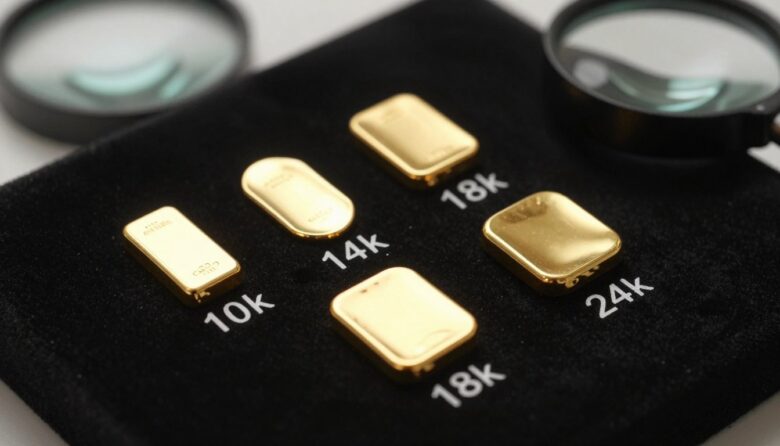
Gold purity is one of the first things to understand before buying a ring, chain, bracelet, watch, coin, or any item described as gold. The difference between 10K, 14K, 18K, and 24K is not just a number on a stamp; it affects how much pure gold the item contains, how durable it is, how it looks, and how much it may cost.
Many buyers think higher karat gold is always better, but that is not always true. A 24K piece has the highest gold content, but it is usually much softer than lower-karat gold. A 14K ring may be less pure, but it can be more practical for daily wear because it contains more alloy metals that improve strength.
The right choice depends on how the item will be used. A wedding band worn every day, a delicate necklace kept for special occasions, and a gold bar bought mainly for metal value may each require a different level of purity.
This guide explains gold purity in simple terms, shows the practical differences between 10K, 14K, 18K, and 24K, and helps you understand what to check before spending money on gold jewelry or gold items.
Before making a purchase, remember that gold markings, local standards, and seller descriptions can vary by country. When the item is expensive, antique, imported, or sold online, it is safer to verify the details with a reputable jeweler, assay office, or official consumer protection source.
Important note: gold jewelry can involve a significant financial decision. Always confirm the karat mark, seller reputation, return policy, and written description before buying. This article is educational and does not replace a professional appraisal, contract review, or individual financial advice.
What Gold Purity Means in Simple Terms
Gold purity describes how much pure gold is present in an item compared with other metals. Pure gold is measured as 24 karats, often written as 24K. Lower karat numbers mean the item contains less pure gold and more alloy metals such as copper, silver, zinc, nickel, or palladium, depending on the color and manufacturing method.
The karat system is based on 24 parts. For example, 18K gold means 18 parts gold and 6 parts other metals. That equals 75% pure gold. In the same way, 14K gold contains 14 parts gold out of 24, or about 58.3% pure gold.
In practice, alloys are not automatically bad. They are often necessary because pure gold is naturally soft. Adding other metals can make jewelry stronger, more scratch resistant, easier to shape, and more suitable for daily use.
| Karat | Approximate Pure Gold Content | Approximate Alloy Content | Simple Meaning |
|---|---|---|---|
| 10K | 41.7% | 58.3% | More alloy than gold, strong and usually more affordable. |
| 14K | 58.3% | 41.7% | A common balance between purity, durability, and price. |
| 18K | 75% | 25% | Higher gold content with a richer color and softer feel. |
| 24K | Nearly pure gold | Very little alloy | Highest purity, but usually too soft for many everyday jewelry uses. |
10K, 14K, 18K, and 24K Gold Compared Side by Side
The easiest way to compare 10K, 14K, 18K, and 24K gold is to look at daily use. Higher purity usually gives a warmer gold color and higher gold content, but it also tends to be softer. Lower purity usually gives more durability and a lower price, but the color may look less rich.
For example, a person who works with their hands may prefer 10K or 14K for a ring because it can better handle daily contact. Someone buying a luxury necklace for occasional use may prefer 18K because the richer gold tone can look more refined. A buyer focused mainly on pure metal content may look at 24K, but usually for bullion, coins, or very specific jewelry traditions.
| Gold Type | Best Use | Main Advantage | Main Limitation |
|---|---|---|---|
| 10K Gold | Budget-friendly daily jewelry | Strong, durable, and usually less expensive | Lower gold content and less intense gold color |
| 14K Gold | Everyday rings, chains, bracelets, and earrings | Good balance of strength, appearance, and value | Not as rich in color as 18K or 24K |
| 18K Gold | Fine jewelry and special pieces | Higher purity and richer gold tone | Softer and usually more expensive than 14K |
| 24K Gold | Bullion, coins, cultural jewelry, and collectible pieces | Highest gold content | Very soft for many daily jewelry designs |
How Karat Affects Color, Durability, and Price
Karat changes more than purity. It also affects how the gold looks and performs. Higher karat gold generally has a deeper yellow tone because it contains more pure gold. Lower karat gold can look paler because it contains a larger percentage of other metals.
Durability moves in the opposite direction. A lower-karat alloy often resists bending and scratching better than high-purity gold. That is why 14K is commonly chosen for engagement rings, wedding bands, and everyday chains. It is not the purest option, but it is often practical.
Price is also connected to purity. Since 18K contains more gold than 14K, it usually costs more when design, brand, craftsmanship, gemstone quality, and weight are similar. However, price is not based only on gold content. Labor, brand markup, gemstone setting, retailer margin, and design complexity can change the final price significantly.
| Factor | Lower Karat Gold | Higher Karat Gold | What to Remember |
|---|---|---|---|
| Color | Usually lighter or less rich | Usually warmer and more yellow | Color also depends on the alloy mix. |
| Durability | Often stronger for daily wear | Often softer and easier to mark | Design thickness also affects strength. |
| Price | Usually more affordable | Usually more expensive | Brand, weight, and craftsmanship also matter. |
| Metal Sensitivity | May contain more alloy metals | Contains less alloy metal | Ask about nickel or other possible irritants if you have sensitive skin. |
How to Choose the Right Gold Purity for Your Needs
Choosing gold purity becomes easier when you start with how the item will be worn. A ring that touches surfaces all day has different needs from a pendant that rests on clothing. A bracelet may get more impact than earrings. A delicate chain may need strength even if it looks small.
For everyday jewelry, 14K is often a practical middle ground because it offers good durability while still containing a meaningful amount of gold. 10K can make sense for buyers who prioritize strength and budget. 18K can be better for people who want a more luxurious color and are comfortable with more careful use. 24K is better treated as a high-purity option that needs extra care.
A common mistake is buying only by karat and ignoring design. A thin 18K ring may wear faster than a well-made 14K ring. A hollow chain may feel large but contain less metal than expected. Always compare karat, weight, construction, and seller terms together.
- Choose 10K or 14K if the jewelry will be worn every day and may face frequent contact.
- Choose 18K if richer color and higher gold content are more important than maximum hardness.
- Be careful with 24K jewelry if you expect it to handle daily pressure, bending, or scratching.
- Ask whether white gold contains nickel if you have sensitive skin.
- Compare the item weight, not only the karat number.
- Check whether the piece is solid, hollow, plated, gold-filled, or vermeil.
Step-by-Step Guide to Checking Gold Purity Before Buying
Before buying gold, take a few minutes to verify what the seller is actually offering. This is especially important online, where photos can make plated, filled, hollow, and solid gold pieces look similar. A careful check helps prevent confusion and reduces the chance of paying solid-gold prices for a lower-value item.
-
Read the full product description.
Look for the exact wording used by the seller. “14K gold” is different from “14K gold plated,” “14K gold filled,” or “gold tone.” The description should clearly state whether the item is solid gold alloy or only has a gold surface layer.
-
Check the karat mark or fineness mark.
Look for markings such as 10K, 14K, 18K, 24K, 417, 585, 750, or 999. These marks usually indicate purity, but they should still be considered alongside seller reputation and documentation.
-
Ask about item weight.
Gold value is strongly connected to weight and purity. A small 18K item may contain less gold than a heavier 14K item. Always compare both the karat and the weight before judging value.
-
Confirm whether the item is solid or hollow.
Hollow gold can be real gold, but it may dent more easily and contain less metal than a solid piece of similar size. Ask directly if the construction is not clear.
-
Review the return and authenticity policy.
A reputable seller should provide clear terms, receipts, and a reasonable way to resolve authenticity concerns. Avoid sellers who refuse to answer basic questions about purity, weight, or construction.
-
Use professional testing for expensive or uncertain pieces.
If the item is costly, antique, inherited, or bought from a private seller, a jeweler or appraiser can test it using professional methods. Home tests can be risky if used incorrectly and may damage jewelry.
Common Mistakes When Comparing 10K, 14K, 18K, and 24K Gold
One common mistake is assuming that higher karat always means better jewelry. Higher karat means more pure gold, but it does not always mean better durability, better design, or better value for your lifestyle. A high-purity piece can still be a poor choice if it bends, scratches, or does not match how you plan to wear it.
Another mistake is confusing solid gold with gold-plated or gold-filled items. A plated item may look beautiful, but the gold is only on the surface. A gold-filled item usually has a thicker gold layer than standard plating, but it is still not the same as solid karat gold throughout the entire piece.
Buyers also sometimes ignore the seller’s wording. Terms like “gold color,” “gold tone,” “gold finish,” and “gold look” may describe appearance, not actual gold content. When the wording is unclear, ask for a written answer before buying.
| Common Mistake | Why It Matters | Safer Approach |
|---|---|---|
| Buying only by karat | Karat does not show design quality, weight, or construction. | Compare purity, weight, build, and seller reputation. |
| Ignoring the word “plated” | Plated jewelry is not solid gold throughout. | Read the full description carefully. |
| Assuming 24K is best for daily wear | Very high-purity gold is soft and can mark easily. | Use 14K or 18K for many daily jewelry needs. |
| Trusting photos alone | Photos do not prove gold content. | Ask for markings, receipts, and return terms. |
Gold Stamps, Fineness Marks, and Seller Claims
Gold items often carry stamps that indicate purity. In the karat system, common marks include 10K, 14K, 18K, and 24K. In the millesimal fineness system, you may see numbers such as 417, 585, 750, and 999. These numbers represent parts per thousand of pure gold.
For example, 585 usually corresponds to 14K gold because it is about 58.5% pure gold. A 750 mark usually corresponds to 18K gold because it is about 75% pure gold. A 999 mark is often used for very high-purity gold, close to 24K.
However, a stamp alone is not absolute proof. Counterfeit marks can exist, older items may be worn, and imported pieces may follow different standards. In many cases, the safest approach is to combine the stamp with documentation, seller reputation, and professional testing when needed.
| Mark | Usually Means | Approximate Purity | What to Check |
|---|---|---|---|
| 10K or 417 | 10 karat gold | 41.7% gold | Confirm it is not only plated or coated. |
| 14K or 585 | 14 karat gold | 58.3% to 58.5% gold | Ask whether it is solid, hollow, or gold-filled. |
| 18K or 750 | 18 karat gold | 75% gold | Check design strength for daily wear. |
| 24K, 999, or 999.9 | Very high-purity gold | Nearly pure gold | Handle carefully and verify authenticity. |
Checklist Before Spending Money on Gold Jewelry
A simple checklist can prevent many buying mistakes. This is useful whether you are buying from a local jewelry store, an online marketplace, a private seller, or a brand website. The goal is not to make the process complicated, but to avoid paying for assumptions.
- Confirm the exact karat: 10K, 14K, 18K, 24K, or another standard used in your country.
- Look for a purity or fineness mark, but do not rely on the stamp alone for expensive items.
- Ask whether the item is solid gold, hollow gold, gold-filled, vermeil, or gold-plated.
- Compare the item’s weight with similar pieces.
- Check whether gemstones, brand markup, or craftsmanship are part of the price.
- Read the return policy before paying.
- Ask for a receipt that describes the item clearly.
- Use a professional appraisal when buying antique, inherited, or high-value pieces.
When to Ask a Jeweler, Appraiser, or Official Source
You should ask a professional when the item is expensive, the description is unclear, the stamp is missing, or the seller cannot explain the difference between solid gold and plated gold. A reputable jeweler can inspect the piece and may use testing methods that are more reliable than guessing from color or weight alone.
An independent appraiser can be useful when the item includes gemstones, antique value, designer branding, or insurance needs. In those cases, the value may depend on more than gold purity. Craftsmanship, rarity, condition, and documentation can all affect the final assessment.
Official consumer protection or trade sources are also useful when you need to understand labeling rules in your country. Jewelry marketing rules can vary, so do not assume that every market uses the same standards for gold, gold-filled, vermeil, plated, or rolled gold descriptions.
Conclusion
Gold purity explained simply means understanding how much pure gold is inside an item and how that affects durability, appearance, price, and everyday use. 10K is usually stronger and more affordable, 14K is a balanced daily choice, 18K offers higher purity and richer color, and 24K provides the highest gold content but needs more careful handling.
The best choice is not always the highest karat. For daily rings, chains, and bracelets, durability can matter as much as purity. For special jewelry, luxury appearance, or high-purity pieces, 18K or 24K may make more sense, as long as you understand the softness and care requirements.
Before buying, compare the karat, weight, construction, stamp, seller reputation, and return policy. If the piece is expensive, antique, imported, or unclear, ask a professional jeweler, appraiser, or official source before making a final decision.
FAQ
1. What does 10K gold mean?
10K gold means the item contains 10 parts pure gold out of 24 parts total metal. That equals about 41.7% pure gold and 58.3% alloy metals. Because it contains more alloy than gold, 10K is usually harder and more resistant to scratches than higher-karat gold. It can be a practical option for budget-friendly daily jewelry, especially rings and bracelets. The tradeoff is that it has a lower gold content and may not have the rich yellow color many people associate with higher-purity gold.
2. What does 14K gold mean?
14K gold contains 14 parts pure gold out of 24, which equals about 58.3% pure gold. The remaining 41.7% is made of other metals used to improve strength, color, and workability. Many buyers choose 14K because it offers a strong balance between durability, appearance, and cost. It is commonly used for engagement rings, wedding bands, chains, earrings, and bracelets. For everyday wear, 14K is often more practical than 18K or 24K because it can better resist normal knocks and scratches.
3. What does 18K gold mean?
18K gold contains 18 parts pure gold out of 24, or about 75% pure gold. Because it has more gold than 10K or 14K, it usually has a richer, warmer color and a more luxurious feel. It is popular for fine jewelry, premium rings, necklaces, and special pieces. However, 18K is usually softer than 14K, so it may show wear more easily if used roughly every day. It can be an excellent choice when appearance and higher gold content matter more than maximum durability.
4. What does 24K gold mean?
24K gold is the highest standard in the karat system and means the item is made of nearly pure gold. It has a deep yellow color and high metal value, but it is also very soft compared with alloyed gold. Because of that softness, 24K is not always ideal for everyday rings, thin chains, or jewelry exposed to frequent impact. It is more common in bullion, coins, collectible items, cultural jewelry, and pieces designed for careful use. Buyers should verify authenticity carefully before paying high-purity gold prices.
5. Is 24K gold always better than 18K or 14K?
24K gold is purer, but that does not automatically make it better for every purpose. If you want the highest gold content, 24K can be attractive. If you want a ring or bracelet that can handle daily wear, 14K or 18K may be more practical. Jewelry quality depends on more than purity. Design, thickness, craftsmanship, comfort, weight, and how you use the piece all matter. A well-made 14K ring can be a better daily choice than a delicate 24K ring that scratches or bends easily.
6. Which gold purity is best for everyday jewelry?
For many people, 14K gold is the best everyday choice because it offers a useful mix of durability, gold content, and price. 10K can also work well if strength and budget are the main priorities. 18K may be suitable for daily use if the design is sturdy and the wearer is careful, but it is usually softer. 24K is generally less practical for rough daily wear because it can scratch and bend more easily. The best option depends on lifestyle, design, and how often the piece will be worn.
7. Why is lower-karat gold usually stronger?
Lower-karat gold contains a higher percentage of alloy metals. These added metals can make the jewelry harder, stronger, and more resistant to bending or scratching. Pure gold is naturally soft, so it is often mixed with metals such as copper, silver, zinc, or palladium to improve performance. This is why a 14K ring can sometimes hold up better in daily life than an 18K or 24K ring. However, strength also depends on design. A thin 10K piece may still be weaker than a thicker, well-made 14K piece.
8. Can gold color show its purity?
Color can give clues, but it should not be used as proof of gold purity. Higher-karat yellow gold often looks richer and warmer because it contains more pure gold. However, alloy metals can change the color significantly. White gold, rose gold, and greenish gold tones all come from different alloy mixes. Gold-plated items can also look similar to solid gold in photos or under store lighting. To confirm purity, check the stamp, written description, receipt, seller reputation, and professional testing when needed.
9. What is the difference between solid gold and gold plated?
Solid gold jewelry is made from a gold alloy throughout the piece, such as 10K, 14K, or 18K gold. Gold-plated jewelry has only a thin layer of gold on the surface over another base metal. A plated item can look attractive, but the gold layer may wear away over time, especially on rings and bracelets. Gold-filled and vermeil are different from simple plating, but they are still not the same as solid gold. Always read the description carefully before comparing prices.
10. What do 417, 585, 750, and 999 mean on gold?
These are millesimal fineness marks, which show how many parts out of 1,000 are pure gold. A 417 mark usually corresponds to 10K gold, 585 to 14K gold, 750 to 18K gold, and 999 to very high-purity gold close to 24K. These marks are common in many markets and can be easier to compare once you understand the system. Still, a mark should not be the only proof for expensive items. Documentation, seller trust, and professional testing are also important.
11. Is 18K gold good for engagement rings?
18K gold can be a good choice for engagement rings when the buyer wants higher gold content and a richer color. It is often used in fine jewelry and can look elegant, especially in yellow gold designs. However, 18K is softer than 14K, so the ring design matters. A sturdy setting and careful wear can make a big difference. If the wearer works with their hands, exercises with rings on, or wants maximum durability, 14K may be a more practical option.
12. Should I buy 10K gold if I want affordable jewelry?
10K gold can be a reasonable option for affordable jewelry because it contains less pure gold and more alloy metals, which usually lowers the price compared with 14K or 18K. It can also be durable for daily wear. The main drawback is lower gold content and a less rich gold color. If your priority is budget and strength, 10K may make sense. If you want a warmer color and more gold content, compare it carefully with 14K before deciding.
13. Can people with sensitive skin wear 10K or 14K gold?
Some people with sensitive skin can wear 10K or 14K gold without problems, but others may react to certain alloy metals, especially nickel in some white gold jewelry. Higher-karat gold contains less alloy metal, which may help some wearers, but it does not guarantee comfort for everyone. If you have known metal sensitivity, ask the seller what metals are in the alloy. You may also consider nickel-free options, platinum, or other hypoallergenic metals. For persistent irritation, stop wearing the item and ask a qualified professional.
14. How can I avoid buying fake gold?
To reduce the risk of buying fake gold, buy from reputable sellers, read the full product description, check the purity mark, request a receipt, and understand the return policy. Be careful with listings that use vague words such as “gold tone,” “gold finish,” or “gold look” without stating actual karat content. Very low prices can also be a warning sign. For expensive, antique, or private-sale pieces, use professional testing before relying on a stamp or photo. A careful check before payment is safer than trying to solve the problem later.
Editorial note: This article is for educational purposes and is intended to help readers understand common gold purity terms before buying jewelry or gold items. It does not replace a professional appraisal, independent assay, financial review, or legal guidance about jewelry labeling rules in your country.
Official References

Orion Eastwood is a certified jewelry materials specialist with over twelve years of experience in metal testing, gemstone authentication, and consumer advocacy. He began as a quality assurance technician for a jewelry importer in Portland, Oregon, before moving to independent consulting in 2017, where he has tested over 2,000 jewelry samples for plating durability, nickel content, and hypoallergenic compliance.
Orion holds a Graduate Diamonds diploma from the Gemological Institute of America (GIA) and advanced training in precious metal analysis through the Jewelers Vigilance Committee (JVC). At Moda Jewels, he translates technical metallurgical concepts into practical buying and care guidance for everyday consumers.