Learning how to prevent jewelry from tarnishing is one of the easiest ways to keep your favorite pieces looking clean, bright, and wearable for longer. Tarnish can make silver, gold-plated, brass, copper, and costume jewelry look dull, dark, or stained, even when the piece is not damaged.
The good news is that tarnishing is usually a surface reaction, not a sign that the jewelry is ruined. It often happens when metal reacts with moisture, air, sweat, perfume, lotion, cleaning products, or certain storage conditions. With the right habits, you can slow this process and avoid many common mistakes.
Different jewelry materials need different levels of care. Sterling silver, for example, tarnishes more easily than solid gold, while plated jewelry can lose its finish if it is cleaned too aggressively. That is why prevention is safer than trying to fix heavy tarnish later.
This guide explains what causes tarnish, how to store jewelry correctly, what to avoid during daily use, how to clean pieces safely, and when it is better to ask a professional jeweler for help.
By the end, you will have a practical routine for protecting rings, necklaces, earrings, bracelets, and delicate pieces without needing expensive products or complicated methods.
Important note: before using any cleaner, polishing cloth, or storage product, check the jewelry material first. Gemstones, pearls, plated finishes, antique pieces, and costume jewelry can be damaged by products that are safe for plain metal.
Why Jewelry Tarnishes in the First Place
Tarnish happens when the surface of a metal reacts with elements around it. For many pieces, the main triggers are moisture, oxygen, sulfur compounds, sweat, cosmetics, and household chemicals. The result can be a yellow, brown, gray, green, or black layer on the surface.
Sterling silver is one of the most common metals affected by tarnish because it contains silver mixed with other metals, usually copper. Brass and copper also react easily with air and moisture. Gold-plated jewelry may not tarnish in the same way as silver, but its thin outer layer can become dull, discolored, or worn down.
In daily life, tarnish often appears after jewelry is left in a bathroom, stored in open air, worn during workouts, exposed to perfume, or kept in a humid drawer. A common mistake is assuming that all jewelry can be stored together in one box without protection.
| Cause | What It Can Do | How to Reduce the Risk |
|---|---|---|
| Humidity | Speeds up surface reactions and darkening | Store jewelry in a dry place with anti-tarnish strips or silica gel |
| Perfume and lotion | Leaves residue that can dull or stain metal | Apply products first and wear jewelry only after skin is dry |
| Sweat | Can react with metals and loosen residue | Remove jewelry before exercise or heavy outdoor activity |
| Household cleaners | Can damage finishes, stones, and plated layers | Take jewelry off before cleaning, washing dishes, or using chemicals |
| Open-air storage | Allows constant exposure to air and moisture | Use closed pouches, lined boxes, or individual bags |
How to Prevent Jewelry from Tarnishing with Proper Storage
The best way to prevent jewelry from tarnishing is to control where and how it is stored. Jewelry should be kept in a cool, dry place, away from bathrooms, windows, direct sunlight, and open containers where moisture can build up.
Individual storage is important because different metals and finishes can rub against each other. Chains can scratch pendants, rings can mark softer metals, and plated jewelry can lose its surface faster when stored loose with harder pieces.
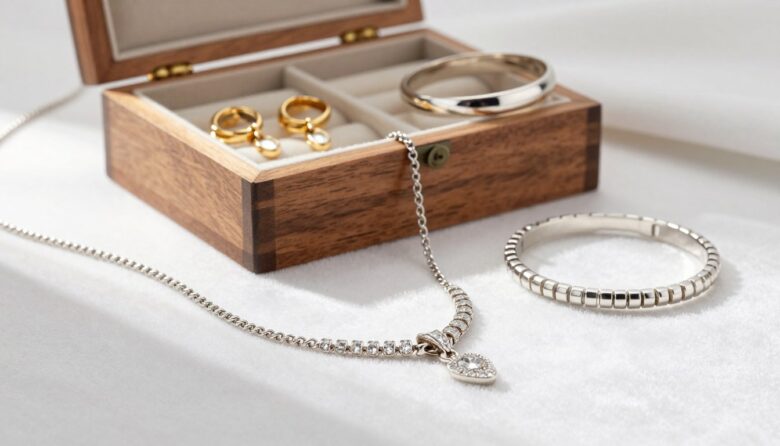
For everyday use, a soft-lined jewelry box, anti-tarnish pouch, or small zip bag can work well. For silver pieces, anti-tarnish strips are especially useful because they help absorb compounds in the air that contribute to discoloration.
- Store each piece separately when possible.
- Keep jewelry away from bathrooms and humid rooms.
- Use anti-tarnish strips for silver jewelry.
- Place silica gel packets near jewelry to help reduce moisture.
- Close boxes, pouches, or bags fully after use.
- Avoid leaving jewelry on open trays for long periods.
In practice, many tarnish problems start because jewelry is removed at night and left on a sink, dresser, or bathroom counter. A small closed pouch near your usual dressing area can prevent that habit from becoming a long-term problem.
Daily Habits That Keep Jewelry Cleaner for Longer
Daily habits make a major difference. Even good storage cannot fully protect jewelry if the pieces are repeatedly exposed to sweat, soap, perfume, chlorine, sunscreen, or cleaning products. A simple rule is to make jewelry the last thing you put on and the first thing you take off.
This means applying perfume, lotion, hair spray, makeup, and sunscreen before wearing jewelry. Wait until the product is dry, then put on your rings, earrings, necklace, or bracelet. This reduces sticky residue and chemical exposure.
You should also remove jewelry before swimming, showering, washing dishes, exercising, sleeping, or cleaning. These situations expose jewelry to moisture, impact, pressure, friction, and chemicals that can speed up tarnishing or damage delicate finishes.
-
Apply personal care products first.
Use perfume, lotion, sunscreen, makeup, and hair products before wearing jewelry. This helps prevent residue from sitting directly on the metal or stones.
-
Wait until your skin is dry.
Putting jewelry on immediately after applying products can trap moisture and chemicals against the surface. Waiting a few minutes is a simple but useful habit.
-
Remove jewelry before water exposure.
Take pieces off before showering, swimming, washing dishes, or cleaning. Water alone may not always cause damage, but repeated exposure increases the risk.
-
Wipe jewelry after wearing it.
Use a soft, dry, lint-free cloth to remove sweat, oils, and light residue before storage. Avoid rough paper towels because they can scratch softer surfaces.
-
Store pieces immediately.
Do not leave jewelry on counters, sinks, gym bags, or car consoles. Returning each piece to a dry pouch or box reduces air, moisture, and accidental damage.
Best Storage Options for Different Jewelry Types
Not every jewelry type should be stored the same way. Plain sterling silver, gold-plated pieces, pearls, gemstone jewelry, and costume jewelry all have different care needs. Choosing the right storage method helps prevent tarnish and protects the structure of the piece.
Sterling silver benefits from anti-tarnish storage. Gold-plated jewelry needs soft separation because friction can wear down the plating. Pearls and some natural stones should not be sealed in very dry conditions for long periods without care, because organic materials can be sensitive.
Costume jewelry often contains mixed metals, adhesives, coatings, and decorative stones. It should be kept dry and handled gently because harsh cleaning can loosen stones, remove color, or damage the finish.
| Jewelry Type | Best Storage Method | Important Care Tip |
|---|---|---|
| Sterling silver | Anti-tarnish pouch or closed box | Add anti-tarnish strips and keep away from humidity |
| Gold-plated jewelry | Soft pouch or separate compartment | Avoid friction, polishing compounds, and harsh cleaners |
| Solid gold | Lined jewelry box or pouch | Clean gently to remove oils and product buildup |
| Pearls | Soft cloth pouch | Avoid chemicals, perfume, and very rough cleaning |
| Costume jewelry | Dry individual pouch or compartment | Keep away from water and strong cleaning products |
Safe Cleaning Methods to Reduce Tarnish Buildup
Cleaning helps prevent tarnish from becoming heavier, but it must be done carefully. The safest routine for most pieces is a gentle wipe with a soft, dry cloth after wearing. This removes oils, sweat, and surface residue before they react with the metal.
For plain sterling silver without stones, a silver polishing cloth can help remove light tarnish. However, polishing cloths should be used with care on plated jewelry because repeated polishing can wear down the outer layer. If the piece has gemstones, pearls, enamel, glue, or antique details, avoid using strong cleaners unless the manufacturer or jeweler confirms they are safe.
Warm water with a small amount of mild soap may be suitable for some solid metal pieces, but jewelry should never be soaked unless you are sure the materials can handle it. Always dry the piece completely before storing it.
- Use a soft, lint-free cloth after each wear.
- Do not scrub plated jewelry aggressively.
- Avoid toothpaste, baking soda paste, bleach, and abrasive powders on delicate pieces.
- Do not soak pearls, glued stones, or costume jewelry.
- Dry jewelry completely before putting it away.
- Test any cleaner on a less visible area only when appropriate.
A practical warning: many viral cleaning methods are too harsh for delicate jewelry. A method that makes plain silver shine may damage plating, loosen stones, or scratch softer materials.
What to Avoid If You Want Jewelry to Stay Bright
Prevention is often about avoiding repeated exposure to things that slowly damage jewelry. Water, chemicals, friction, and poor storage are the main issues. Even if a piece looks fine after one exposure, the effect can build over time.
Do not wear jewelry in pools or hot tubs. Chlorine can be harsh on metals and finishes. Salt water can also leave residue and increase surface wear. Shower products, shampoo, and soap can build up in small details and make jewelry look dull.
Sleeping with jewelry is another habit to avoid. Chains can bend or knot, rings can rub against bedding, and earrings can experience pressure. This may not always cause tarnish directly, but it increases wear and makes the piece harder to maintain.
| Habit to Avoid | Possible Problem | Better Alternative |
|---|---|---|
| Wearing jewelry in the shower | Soap residue, moisture, and dullness | Remove pieces before bathing |
| Using perfume directly over jewelry | Chemical residue and discoloration | Apply fragrance first and wait before wearing jewelry |
| Storing all pieces together | Scratches, tangles, and plating wear | Use separate pouches or compartments |
| Cleaning with abrasive home remedies | Scratches or finish damage | Use a soft cloth or material-safe cleaner |
| Leaving jewelry in gym bags | Sweat, humidity, and impact damage | Carry a small dry jewelry pouch |
Common Mistakes That Make Tarnish Worse
One common mistake is waiting until jewelry is heavily tarnished before doing anything. Light surface discoloration is usually easier to manage than thick buildup. Regular wiping and proper storage can reduce the need for stronger cleaning later.
Another mistake is using the same cleaning method for every piece. A plain silver band, a gold-plated necklace, a pearl earring, and a costume bracelet should not all be treated the same way. The safest method depends on the weakest material in the piece, not just the main metal.
Many people also store jewelry in the bathroom because it feels convenient. Unfortunately, bathrooms are usually humid and full of products that can affect metals and finishes. A bedroom drawer or closet shelf is often a safer option.
Using harsh cleaners too quickly
Strong cleaners can remove tarnish, but they can also remove finishes, damage stones, or leave residue in small settings. Start with the gentlest method first, then move carefully if needed.
Ignoring manufacturer or jeweler guidance
If a piece came with care instructions, follow them. This is especially important for plated jewelry, pearls, treated gemstones, watches, and antique pieces.
Polishing too often
Polishing can help plain metal look brighter, but excessive polishing can remove material over time. This is especially risky for plated surfaces and detailed designs.
How to Handle Jewelry That Has Already Tarnished
If jewelry has already tarnished, start by identifying the material. Do not rush into cleaning before knowing whether the piece is solid silver, silver-plated, gold-plated, brass, copper, stainless steel, or costume jewelry. The wrong method can make the problem worse.
For light tarnish on plain sterling silver, a silver polishing cloth is often enough. For gold-plated or delicate pieces, use only a soft dry cloth unless the brand or jeweler recommends another method. For costume jewelry, avoid soaking and keep moisture to a minimum.
If tarnish is heavy, uneven, green, sticky, or located around stones and settings, professional cleaning may be safer. A jeweler can inspect whether the discoloration is simple tarnish, worn plating, corrosion, residue, or another issue.
-
Identify the material.
Check markings, receipts, product pages, or brand guidance. Cleaning without knowing the material is one of the easiest ways to damage jewelry.
-
Remove loose residue.
Use a soft, dry cloth to gently wipe the surface. Do not scrape dark areas with sharp tools or rough materials.
-
Use the mildest safe method.
Choose a polishing cloth or cleaner only if it is appropriate for that specific piece. Avoid soaking jewelry with pearls, glued stones, or delicate coatings.
-
Dry and inspect the piece.
Make sure no moisture remains in chains, clasps, stone settings, or decorative details before storing the jewelry again.
-
Ask a jeweler if the problem remains.
If the jewelry still looks stained or damaged, professional inspection can prevent accidental over-cleaning.
When to Ask a Professional Jeweler for Help
You should consider professional help when the jewelry is valuable, antique, sentimental, heavily tarnished, or made with delicate materials. Professional cleaning is also safer when the piece has pearls, opals, emeralds, glued stones, enamel, intricate settings, or plating that may be thin.
A jeweler can also tell whether the issue is tarnish or something else. For example, worn plating may look like discoloration, but cleaning will not restore the missing layer. In that case, replating may be needed instead of polishing.
Professional help is also recommended if a clasp is loose, a stone moves, a chain is weakened, or the piece has green corrosion around joints or settings. Cleaning a structurally weak piece at home can cause more damage.
- The jewelry has high financial or sentimental value.
- The piece contains pearls, opals, emeralds, or delicate stones.
- The item is antique, vintage, or inherited.
- The plating appears worn or patchy.
- A stone feels loose or a clasp does not close securely.
- Tarnish remains after gentle cleaning.
Simple Long-Term Routine to Prevent Jewelry Tarnish
A good prevention routine does not need to be complicated. The most effective approach is consistent care: avoid chemicals, wipe after wearing, store pieces separately, and keep moisture under control.
For jewelry you wear every day, create a small storage station with a soft cloth and a dry pouch. For jewelry you wear less often, check it occasionally so tarnish does not build unnoticed. Silver pieces stored for months can still darken if they are exposed to air and humidity.
For travel, use a compact jewelry case or separate small bags. Avoid throwing jewelry into makeup bags, wallets, or luggage pockets where it can rub against cosmetics, coins, keys, or metal zippers.
| Routine | How Often | Why It Helps |
|---|---|---|
| Wipe jewelry with a soft cloth | After wearing | Removes sweat, oil, and product residue |
| Check storage conditions | Weekly or monthly | Helps avoid humidity and open-air exposure |
| Replace anti-tarnish strips | According to product instructions | Keeps protective storage more effective |
| Inspect clasps and stones | Every few months | Prevents small damage from becoming worse |
| Professional cleaning | When needed | Protects delicate, valuable, or heavily tarnished pieces |
Conclusion
Knowing how to prevent jewelry from tarnishing comes down to reducing moisture, chemicals, friction, and poor storage. Most tarnish problems can be slowed by wiping jewelry after use, storing pieces separately, and keeping them away from bathrooms, perfume, lotion, sweat, and cleaning products.
The safest approach is to match your care routine to the material. Sterling silver, plated jewelry, pearls, gemstones, and costume pieces do not all respond well to the same cleaning methods. When in doubt, choose the gentlest option and avoid harsh home remedies.
If a piece is valuable, delicate, antique, heavily tarnished, or showing signs of damage, ask a professional jeweler before trying stronger cleaning methods. Prevention is simple, but careful decisions can protect the beauty and life of your jewelry for much longer.
FAQ
1. What is the best way to prevent jewelry from tarnishing?
The best way to prevent jewelry from tarnishing is to keep it dry, clean, and properly stored. Wipe each piece with a soft cloth after wearing it, especially if it touched sweat, lotion, perfume, or sunscreen. Store jewelry separately in a dry pouch, lined box, or anti-tarnish bag. Avoid leaving pieces in bathrooms, near windows, or on open trays for long periods. For silver jewelry, anti-tarnish strips can help reduce exposure to compounds in the air that cause darkening.
2. Why does my jewelry tarnish so quickly?
Jewelry can tarnish quickly when it is exposed to moisture, sweat, perfume, lotion, chlorine, household cleaners, or humid storage conditions. Some metals, such as sterling silver, brass, and copper, react more easily with air and moisture. Your skin chemistry, climate, and daily habits can also affect how fast tarnish appears. If you wear jewelry while exercising, showering, cleaning, or applying cosmetics, discoloration may show up sooner. Better storage and gentle wiping after use usually help slow the process.
3. Can I store all my jewelry together in one box?
You can store jewelry in one box if the pieces are separated into compartments, but placing everything together in a loose pile is not ideal. Different metals and finishes can rub against each other, causing scratches, tangles, and plating wear. Chains can knot, rings can scrape softer surfaces, and costume pieces may lose stones or coatings. A better option is to use individual pouches, soft dividers, or small bags inside the box. This protects both the appearance and structure of each piece.
4. Does water make jewelry tarnish?
Water can contribute to tarnish, especially when jewelry is exposed repeatedly or not dried properly afterward. Plain water is not the only issue. Shower products, chlorine, salt, soap, shampoo, and minerals can leave residue or react with metals and finishes. Moisture trapped around stones, clasps, and chain links can also cause dullness or buildup. It is safer to remove jewelry before showering, swimming, washing dishes, or cleaning. If jewelry gets wet, dry it completely with a soft cloth before storage.
5. Is sterling silver more likely to tarnish than gold?
Yes, sterling silver is generally more likely to tarnish than solid gold. Sterling silver contains silver mixed with other metals, commonly copper, and this mixture can react with air, moisture, and sulfur compounds. Solid gold is more resistant to tarnish, although it can still collect oils, dirt, and product residue. Gold-plated jewelry needs special care because the outer layer is thin and can wear down. Each material should be cleaned and stored according to its own care needs.
6. Do anti-tarnish strips really work?
Anti-tarnish strips can help when used correctly, especially for silver jewelry stored in closed spaces. They are designed to absorb or neutralize certain compounds in the air that contribute to tarnishing. However, they are not a complete solution if jewelry is still exposed to moisture, perfume, sweat, or poor storage habits. For best results, use them inside closed boxes, pouches, or bags and replace them according to the product instructions. They work best as part of a broader prevention routine.
7. Should I clean jewelry before storing it?
Yes, it is a good habit to wipe jewelry before storing it. Even if a piece looks clean, it may have skin oils, sweat, lotion, sunscreen, or perfume residue on the surface. Over time, these substances can make jewelry look dull or encourage tarnish. Use a soft, dry, lint-free cloth and avoid rough materials. For delicate pieces, do not use liquid cleaners unless you know they are safe for the material. Make sure the jewelry is fully dry before putting it away.
8. Can toothpaste remove tarnish from jewelry?
Toothpaste is often suggested as a home remedy, but it is not a safe choice for many jewelry pieces. It can be abrasive and may scratch softer metals, damage plating, dull gemstones, or leave residue in small settings. Even if it appears to work on plain metal, it can cause long-term surface wear. A soft polishing cloth made for the specific metal is usually safer. For plated, pearl, antique, or gemstone jewelry, ask a jeweler before using any cleaning method.
9. How do I prevent gold-plated jewelry from tarnishing or fading?
Gold-plated jewelry should be kept dry, stored separately, and cleaned very gently. Avoid wearing it in the shower, pool, gym, or while applying perfume and lotion. Because the gold layer is thin, friction and harsh polishing can wear it away. Store each plated piece in a soft pouch or separate compartment, and wipe it lightly after wearing. Do not use abrasive cloths, strong dips, or rough brushes unless the brand specifically says they are safe for that item.
10. Is it safe to use baking soda on tarnished jewelry?
Baking soda can be too abrasive for many pieces, especially plated jewelry, pearls, soft stones, costume jewelry, and antique items. Some people use it on plain silver, but it should still be handled carefully because rubbing can scratch the surface. The safest first step is usually a soft cloth or a cleaner specifically made for the jewelry material. If the piece is valuable or delicate, avoid baking soda and ask a jeweler for advice before trying stronger cleaning methods.
11. Why does jewelry turn green?
Green discoloration can happen when copper or copper-containing metals react with moisture, sweat, or chemicals. This is common with some brass, copper, and costume jewelry. Sometimes the green color appears on the jewelry, and sometimes it transfers to the skin. It does not always mean the piece is dangerous, but it does show that the metal is reacting. Keep the piece dry, wipe it after use, and avoid wearing it during sweating or water exposure. If the surface is corroded, professional advice may be needed.
12. Can tarnish permanently damage jewelry?
Light tarnish is usually a surface issue and can often be cleaned safely if the material is suitable. However, heavy tarnish, corrosion, worn plating, or repeated harsh cleaning can cause longer-term damage. Plated jewelry is especially vulnerable because the outer layer can wear away. Tarnish around stone settings or delicate details can also be harder to remove without risk. Prevention is safer than aggressive cleaning. If a piece looks deeply stained, rough, or structurally weak, take it to a jeweler.
13. How often should I clean my jewelry?
For everyday jewelry, a quick wipe after each wear is usually enough to prevent residue buildup. A deeper cleaning depends on the material, how often you wear the piece, and whether it has stones, plating, pearls, or delicate details. Plain metal pieces may tolerate occasional gentle cleaning, while costume or plated jewelry should be cleaned less aggressively. Do not over-polish, because frequent rubbing can wear down surfaces. If the jewelry still looks dull after gentle care, ask a jeweler before using stronger products.
14. Where should I not store jewelry?
Avoid storing jewelry in bathrooms, near sinks, in direct sunlight, in open trays for long periods, or inside gym bags and makeup bags. These places expose jewelry to moisture, heat, chemicals, friction, or impact. Bathrooms are especially risky because humidity changes often. Makeup bags may contain powders, creams, sprays, and hard objects that can scratch jewelry. A dry drawer, closet shelf, lined jewelry box, or individual pouch is usually a better choice for long-term storage.
Editorial note: This article is educational and intended to help with everyday jewelry care. For valuable, antique, plated, gemstone, pearl, or damaged pieces, confirm the safest cleaning method with the jewelry brand or a qualified jeweler before using chemical cleaners or abrasive polishing methods.
Official References
- Gemological Institute of America — Gem care guidance
- Tiffany & Co. — Jewelry care and repair guidance
- Pandora — Jewelry care guide

Orion Eastwood is a certified jewelry materials specialist with over twelve years of experience in metal testing, gemstone authentication, and consumer advocacy. He began as a quality assurance technician for a jewelry importer in Portland, Oregon, before moving to independent consulting in 2017, where he has tested over 2,000 jewelry samples for plating durability, nickel content, and hypoallergenic compliance.
Orion holds a Graduate Diamonds diploma from the Gemological Institute of America (GIA) and advanced training in precious metal analysis through the Jewelers Vigilance Committee (JVC). At Moda Jewels, he translates technical metallurgical concepts into practical buying and care guidance for everyday consumers.